
Understanding Vendor-Neutral ESL Interfaces for Retail Systems
If you are evaluating electronic shelf labels for retail, you have probably hit the same integration wall: one vendor wants you to use their cloud console, another expects a proprietary protocol, and a third requires a specific management app. A vendor-neutral ESL interface asks a different question: what if one update path could reach displays from multiple hardware manufacturers?
That is the idea behind vendor-neutral ESL integration. This article explains what it means in practice, how a JSON update format such as ESLSEND works under the hood, and where the Next Generation Label Printing System fits as a managed implementation.
What Is a Vendor-Neutral ESL Interface?
Electronic shelf labels, or ESLs, replace printed shelf-edge price tags with small displays that can be updated electronically. In a retail environment, ESLs are used to show prices, promotions, unit pricing, and product information without staff having to replace paper labels every time a price changes.
The challenge is that ESL hardware is not all the same. Different manufacturers use different radio protocols, different management tools, and different cloud services. If you buy ESL displays from one vendor, you often end up tied to that vendor’s update software and infrastructure. That is vendor lock-in.
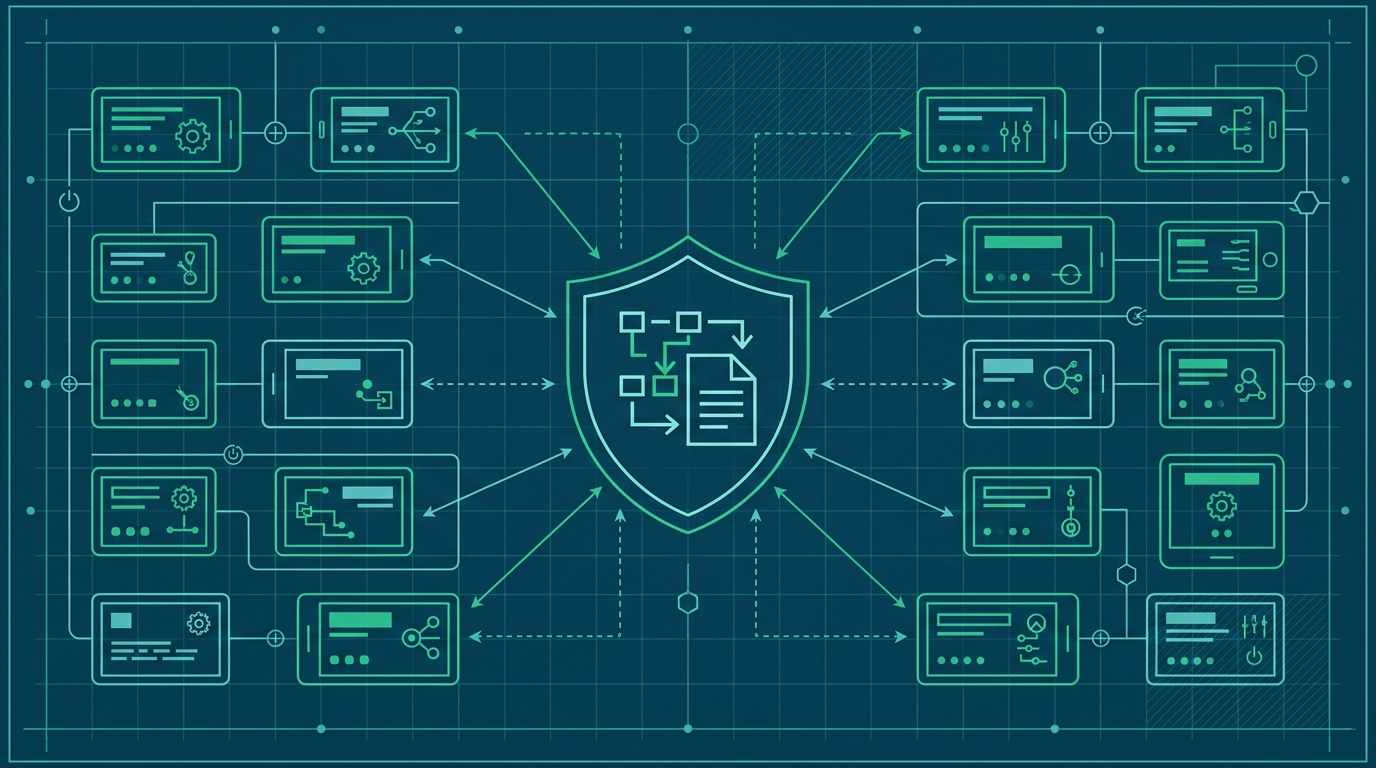
A vendor-neutral ESL interface avoids this by defining a common way to send updates to ESL displays, independent of the hardware underneath. Instead of implementing a separate integration for every ESL brand, you implement one interface. The interface translates the update into whatever the target hardware expects.
One example is the ESLSEND JSON file interface described in the Next Generation Label Printing System documentation. It is a vendor-neutral JSON approach to updating ESL displays. The important word is “vendor-neutral”: the same update format can be consumed by different ESL hardware implementations, provided they support the interface.
The benefits are straightforward:
- Flexibility: You can choose ESL hardware based on price, availability, or features instead of being limited to one vendor.
- Interoperability: A single retail system can update ESLs from multiple manufacturers.
- Future-proofing: If you replace or add ESL hardware later, you do not have to rewrite your integration from scratch.
How Vendor-Neutral ESL Interfaces Work: A Simple Analogy
Think of a vendor-neutral ESL interface like a universal power adapter. A power adapter does not change the fact that different devices need different voltages or plug shapes. It standardizes the connection point so you can power many devices from one socket.
An ESL interface works the same way. The retail system does not need to know whether an ESL uses one radio frequency or another, or whether the display controller comes from manufacturer A or manufacturer B. It only needs to produce a standardized update, and the interface handles the hardware-specific details.
A standardized JSON format acts as a common language. The retail system generates a JSON update file that says, in effect, “item 4012345678901 should now show this price and this promotion.” The interface then transmits that update to the target ESL displays. From the retail system’s point of view, the flow is:
- A price or product data change occurs in the retail system.
- The system generates a JSON update file with item identifiers and display data.
- The JSON file is sent to the ESL interface.
- The interface communicates with the displays, regardless of which manufacturer produced them.
The interface abstracts hardware-specific communication. Your retail system does not need to know about radio protocols, display resolution, or vendor-specific pairing commands. That separation is what makes the integration feel clean in practice.
Under the Hood: The ESLSEND JSON Interface
ESLSEND is introduced in the LPSNG documentation as a vendor-neutral JSON file interface for updating ESL displays. Rather than exposing a hardware-specific protocol, it defines a file format that a retail system can generate and that ESL-capable systems can consume.
The basic idea is simple. A JSON update contains two things that matter most:
- Item identifiers: which products the update applies to.
- Display data: what should appear on the display, such as price, promotion, or unit price.
- Optional formatting: how the data should be presented, depending on the layout or template.
A conceptual shape might look like this. The field names are intentionally generic here; the important part is the structure, not a specific API contract.
{
  "updateId": "store-42-2026-09-28",
  "displays": [
    {
      "itemId": "4012345678901",
      "displayData": {
        "price": "12.99 EUR",
        "unitPrice": "1.30 EUR/100g",
        "promotion": "2 for 20.00"
      },
      "formatting": {
        "template": "price-and-promotion"
      }
    }
  ]
}
The key point is decoupling. The retail system does not need to know how the ESL display physically receives the update. It only needs to produce the structured update. The hardware side is handled by the ESL infrastructure, whether that is a base station, gateway, or vendor adapter.
LPSNG supports this interface as part of its broader cross-media labeling and ESL solution. That means the same platform that generates a printable PDF label can also drive an ESL update, without treating shelf labels and electronic displays as two completely separate systems.
Why Vendor Neutrality Matters in ESL Integration
One common misconception is that a vendor-neutral ESL interface means “lowest common denominator” functionality. That is not the point. Vendor neutrality is about the communication layer, not about removing useful display features. A well-designed interface can still support rich display data such as promotions, unit prices, and templates.
The real risk with proprietary ESL systems is lock-in. If every shelf label update goes through a single vendor’s cloud service, that vendor effectively controls your future hardware choices. Switching vendors becomes expensive because you must replace displays, update integration code, and retrain staff on new management tools.
Vendor-neutral interfaces change that equation. You can:
- Mix ESL hardware from different vendors in one store or across regions.
- Replace one hardware vendor without re-platforming your retail integration.
- Evaluate new ESL technology on its actual merit instead of its compatibility with your current setup.
This is why the LPSNG ESL overview treats vendor-neutral ESL updates as a practical implementation goal rather than an abstract idea. The interface exists so that retail systems can update electronic shelf labels without being trapped by a hardware vendor.
Implementing a Vendor-Neutral ESL Solution with LPSNG
If you are integrating ESL updates into an existing retail system, you do not have to start at the file-format level. The Next Generation Label Printing System is a managed service that hides and automates the underlying protocol.
The managed workflow looks like this:
- Connect your existing system to the LPSNG web service API. The API provides the integration point for submitting updates, and it uses an OAuth2 authentication model for external systems.
- Bind ESL tags to items. The ESL Binding API lets you associate a physical ESL tag with a product. This is especially useful for MDE units without a web interface.
- Send updates from your normal workflows. LPSNG handles the translation from your update request to the appropriate display output.
- Automate where needed. The LPSNG Player is a standalone command-line print and update engine that can take package and data input and produce PDF, PNG, JSON, print, or ESL output.
The hard way would be to manually craft ESLSEND JSON files, maintain your own vendor adapters, and handle each piece of ESL hardware separately. LPSNG exists precisely so you do not have to do that.
Deployment can follow your infrastructure. The cloud edition provides a hosted multi-user environment. The embedded edition runs complete LPSNG on a single-board computer, such as a Raspberry Pi. Both approaches remove the need for you to build and maintain raw ESL protocol handling yourself.
For more detail on the managed implementation, start with the Next Generation Label Printing System documentation.
FAQ
Q: What exactly is a vendor-neutral ESL interface?
A: A vendor-neutral ESL interface is a standardized communication protocol or file format that allows electronic shelf labels from different manufacturers to be updated using the same method. It avoids proprietary protocols, enabling flexibility and preventing hardware lock-in. An example is the ESLSEND JSON file interface described in the LPSNG documentation.
Q: How does the ESLSEND JSON interface work?
A: The ESLSEND interface uses a JSON file format to define updates for ESL displays. A retail system generates a JSON file containing item identifiers and display data, which is then transmitted to the ESL hardware. Because the format is vendor-neutral, the same file can be used with ESLs from different manufacturers, provided they support the interface.
Q: Can I integrate vendor-neutral ESL updates into my existing retail system?
A: Yes, the Next Generation Label Printing System offers managed services to integrate ESL updates. You can use the LPSNG web service API or the ESL Binding API to bind ESL tags to items and send updates without dealing with raw JSON files or hardware-specific protocols. LPSNG also provides a standalone Player for automated updates.
Q: What are the benefits of using a vendor-neutral ESL interface over proprietary solutions?
A: Vendor-neutral interfaces offer greater flexibility, allowing you to mix and match ESL hardware from different vendors. This reduces dependency on a single supplier, lowers costs, and makes it easier to adopt new technology. It also simplifies integration with existing systems, because you only need to implement one interface rather than multiple proprietary ones.
Conclusion
Vendor-neutral ESL interfaces are ultimately about optionality. They let you update electronic shelf labels from different hardware vendors through one integration, avoiding the slow lock-in that comes with proprietary tools. The main concept is simple: produce a structured update file, let the interface handle hardware specifics, and keep your retail system flexible.
If you are planning an ESL integration, the practical path is to use a managed service like the Next Generation Label Printing System rather than building raw protocol handling yourself. LPSNG provides the web service, binding API, and standalone player to handle vendor-neutral ESL updates while fitting into your existing workflow.
Related posts
- Cloud Printing for Thermal Printers: A Workaround Guide
- How to Verify Barcode Label Accuracy Before Printing
- Label Printing for Order Fulfillment: Streamlining Your Process